
Perplexity ranks fresh content with FAQ schema and question-based headers. Update every 2-3 days, get 1,000+ impressions in 30 minutes. Step-by-step guide.
Quick answer: Perplexity AI blogs rank based on three critical factors: freshness (40% weight), structured content with FAQ schema, and citations from trusted domains. Content needs updates every 2-3 days to maintain visibility, with question-based headers and direct answers in the first sentence of each section.
Perplexity AI is a conversational search engine that uses a three-layer (L3) machine learning reranker system to deliver direct answers with cited sources, rather than traditional link lists. As of early 2024, Perplexity is growing at 40% month-over-month, fundamentally changing how users discover content.
Unlike Google, which indexes the entire web and returns ranked links, Perplexity draws from a curated pool of authoritative sources and synthesizes information into conversational answers. This creates a completely different optimization landscape where traditional SEO tactics fail.
Key differences from Google:
Perplexity AI ranks content differently than Google. To rank in Perplexity, you need:

Need help implementing AI-optimized content strategies?
Contact Darwin for expert guidance on Perplexity optimization, schema implementation, and AI-powered content systems that drive visibility.


Most of what you hear about Perplexity blog optimization is wrong.
Yes, it's becoming important — Perplexity AI is growing at a staggering 40% month-over-month rate as of early 2024. But it's not just "generative engine optimization." The rules are completely different.
Remember when you could just stuff keywords into a blog post and call it a day? Those days are gone. Search behavior is shifting from typed keywords to conversational queries. Your perplexity tech blog needs to think like a machine that reasons, not just ranks.
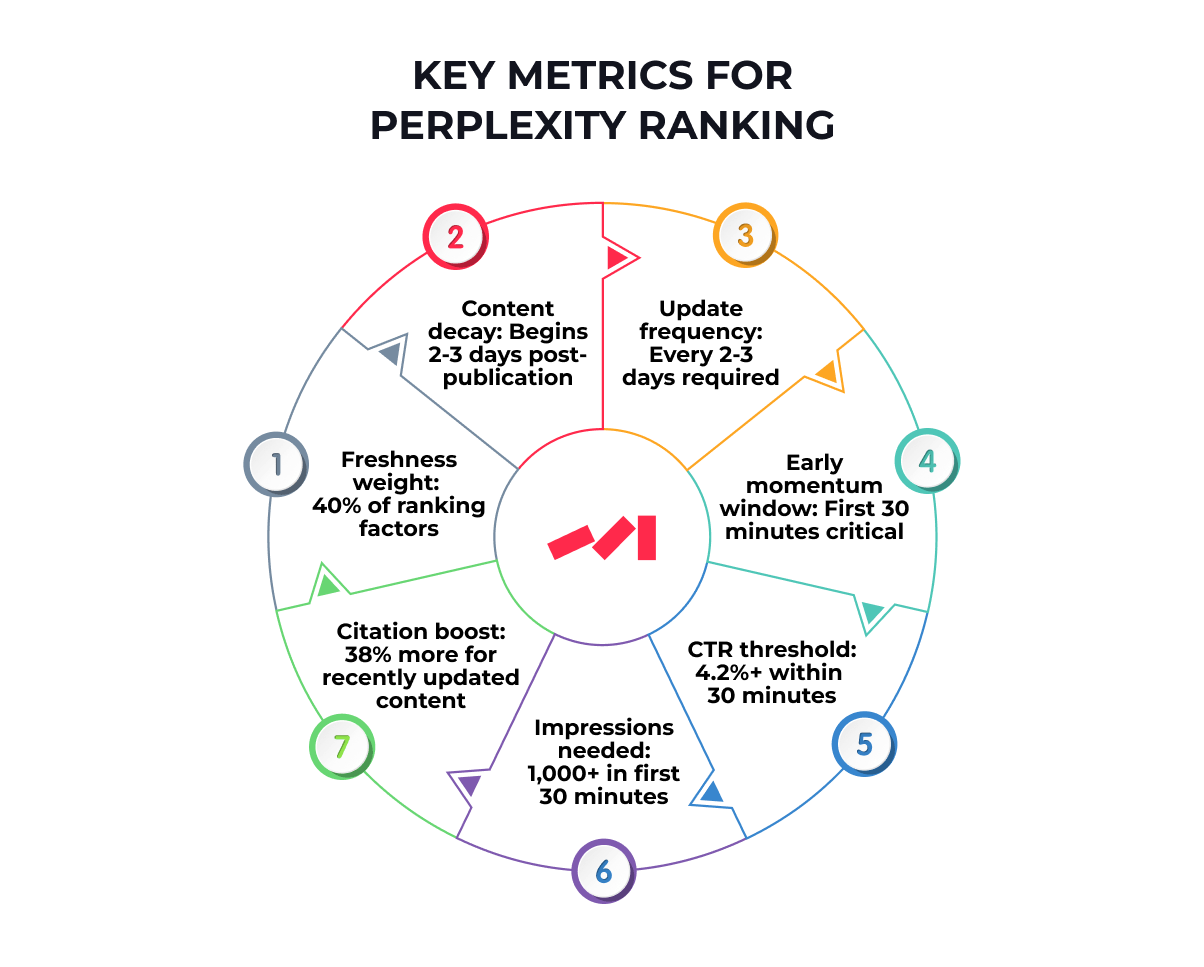
Here's what makes this tricky: Perplexity AI operates on completely different principles than Google. It uses a three-layer reranking system for searches related to entities and heavily rewards recency, giving newly published content a significant ranking boost. Within the first 30 minutes, new content needs at least 1,000 impressions and a 4.2%+ click-through rate to qualify for top rankings.
I've been experimenting with perplexity blog articles for months now. The biggest surprise? Content that lacks structure is virtually invisible to AI systems like Perplexity. They prioritize instant clarity over everything else — a completely different approach than what worked for Google.
Want to really know how to create perplexity blogs that rank? This step-by-step guide will show you exactly how to adapt your content strategy for this AI-powered future. From understanding Perplexity's unique algorithm to implementing the specific formatting techniques that AI answer engines love, you'll learn what actually works.
The landscape is changing fast. But with the right approach, you can stay ahead of the curve.
Perplexity doesn't just look different from Google. It thinks differently. Try to rank in both places with the same approach? You're missing the mark completely.
Understanding these differences isn't optional if you want to create a Perplexity blog that actually gets noticed.
Here's the fundamental shift: Google gives you a list of links to explore, while Perplexity delivers direct answers with cited sources. This changes everything about content visibility.
Perplexity employs a unique three-layer (L3) machine learning reranker system for entity searches (people, companies, topics). This system applies stricter filters than traditional search engines, scrapping entire result sets if too few meet quality thresholds.
Think of it this way: Google indexes the entire internet. Perplexity draws from a smaller pool of authoritative sources. Your Perplexity tech blog isn't competing with millions of pages — it's competing to be considered authoritative enough to make it into an exclusive club.
Another major distinction? Perplexity evaluates whether content is meaningfully connected to search queries through semantic relevance. Instead of just matching keywords, it's trying to understand the actual meaning behind questions using natural language processing and AI understanding.
Time decay is ruthless in Perplexity. Old content fades fast unless refreshed. Research shows visibility begins declining just 2-3 days after publication without updates. This is significantly more aggressive than traditional SEO, which typically requires updates monthly or quarterly.
Your perplexity blog articles need early momentum. During the first few minutes and hours after publishing, Perplexity tracks:
These early performance signals determine whether your content "soars or sinks". Perplexity rewards content that generates quick engagement rather than simply displaying all recent publications.
User engagement metrics like clicks, dwell time, and repeat visits directly fuel visibility. Without these engagement signals, even well-written content won't last in Perplexity's ecosystem.
Perplexity maintains manually curated lists of authoritative domains that receive inherent ranking boosts. Getting mentioned by these platforms provides significant algorithmic advantages. Evidence suggests domains like Amazon, GitHub, LinkedIn, and Coursera are among those receiving special treatment.
Source trustworthiness is paramount. The platform favors original research, expert quotes, and mentions on authoritative third-party sites. Domain and topical authority directly impact visibility since Perplexity relies on a smaller source pool than Google.
For local businesses specifically, Perplexity leans heavily on platforms like Yelp, TripAdvisor, Google reviews, and Foursquare. This creates a two-tier strategy where optimizing your presence on these trusted platforms becomes as important as optimizing your own Perplexity tech blog.
The bottom line? Perplexity's approach isn't about gaming the system. Success comes from creating valuable, relevant, and authoritative content that fits Perplexity's unique ranking ecosystem.
Topic selection isn't random with Perplexity AI—it's strategic. The platform actively boosts certain content categories, giving you a significant advantage if you choose wisely.
Not all topics are created equal in Perplexity's ecosystem. The platform applies category multipliers that dramatically impact visibility. Your perplexity blog gets exponentially more attention when it covers high-value subjects.
Which topics perform best? Research shows AI, technology/innovation, science/research, and business/analytics receive priority treatment. This explains why so many perplexity tech blogs focus on these areas—they simply perform better. If you're deciding between writing about artificial intelligence or home decor, the AI content has a built-in advantage.
High-performance posts in these valuable categories get amplified, whereas content on lower-value topics gets downgraded in visibility. This multiplier effect means choosing the right topic category before you start writing becomes your first critical decision.
Forget traditional keyword research—Perplexity thinks in terms of related concepts and natural language patterns. The platform's AI matches your content to user queries by identifying semantic relationships between terms.
For a perplexity blog article about "email marketing automation," you'd naturally incorporate related terms like:
This approach works because it mirrors how Perplexity processes information. Include both technical terminology and common synonyms (like "content management system" and "website platform"). Connect your main topic to related concepts through clear explanations that show conceptual relationships.
Structure your Perplexity AI blog around question-and-answer patterns. This approach aligns perfectly with how users actually search. Target question-based and informational keywords such as "How to rank in Perplexity search" or "SEO tips for Perplexity AI".
Schema markup contributes 10% of Perplexity's ranking factors, but implementation can be technical.
Contact for custom schema solutions
The old-school SEO tactic of forcing keywords into text works against you with Perplexity. Keyword stuffing creates unnatural language patterns that AI systems immediately recognize and penalize.
Perplexity favors content that answers questions directly with clear, factual information. The first paragraph should provide the answer, using definitive statements and specific data where possible. This is about clarity and utility, not keyword density.
Think of the difference: Traditional SEO might focus on repeating "Perplexity blog ranking" throughout an article. A better strategy creates comprehensive resources that naturally address various related topics. Think of your content as a Swiss Army knife—useful in multiple ways rather than optimized for a single keyword.
Perplexity aims to provide complete answers. Your Perplexity AI blog should strive to be the most comprehensive resource on a given topic. Include detailed FAQ sections, cover subtopics thoroughly, and address the full intent behind queries. The goal isn't just ranking for keywords—it's becoming the definitive source that Perplexity naturally turns to when users ask questions in your area of expertise.
The way you organize your Perplexity blog makes all the difference in whether AI systems can properly understand it. Structure isn't just about making content pretty—it's about helping Perplexity extract and cite your information correctly.
Descriptive H1-H3 headers act like signposts that guide Perplexity to relevant sections of your content. We've noticed that question-based headers work exceptionally well, appearing in about 60% of top results. Instead of generic headings like "Perplexity Optimization Tips," try "How Does Perplexity AI Parse Blog Content?" This mirrors how users actually ask questions.
Your Perplexity tech blog should have a logical hierarchy that flows from broad topics to specific details. Think of it as creating a map—AI systems follow these heading trails to understand relationships between different sections of your content.
FAQ sections are gold mines for Perplexity blog articles. They match the conversational way people search and create perfect citation opportunities. Each question gets a focused answer that Perplexity can extract and showcase.
Group your questions thematically—technical FAQs, getting started FAQs, etc. This creates topic clusters that help AI understand content relationships. Eight to fifteen questions per page seems to be the sweet spot. Too few questions feels incomplete, too many becomes overwhelming.
Don't just make up questions, though. Use Perplexity's own follow-up questions feature to identify what real users are asking. Update your FAQ sections regularly with emerging topics to maintain freshness signals.
Ever notice how some Perplexity AI blog posts get cited more often? They typically start with the direct answer in the first sentence, then provide supporting context. It's like answering a colleague's message—give the answer first, then explain why.
Keep paragraphs short (2-3 sentences max) with subheadings every 200-300 words. This makes your content more scannable for both humans and AI systems. Perplexity loves content that gives straight answers without making readers wade through paragraphs of background first.
Schema markup might sound technical, but it's basically just code that tells AI systems exactly what your content means. This structured data can contribute up to 10% of Perplexity's ranking factors—not something to ignore!
For your Perplexity blog, focus on these schema types:
Adding this code to your HTML helps Perplexity understand your content's purpose and structure. You can use tools like Google's Structured Data Markup Helper to generate the code, then validate it with Google's Rich Results Test.
The technical foundation of your Perplexity tech blog ultimately determines whether AI systems can effectively find, understand, and cite your content. Proper structure isn't optional—it's essential for visibility in this new search paradigm.
Becoming a cited authority in Perplexity takes more than just good content. It requires strategic positioning and active community engagement.
Here's the thing: Perplexity's AI doesn't just favor informative sources—it favors sources that actively participate in their communities.
High-quality backlinks aren't just an old SEO trick. They're arguably more crucial for Perplexity blogs than anything else. When Perplexity scans for reliable sources, backlinks act like votes of confidence.
Consider guest posting on relevant websites or sharing unique research that others will naturally reference. Perplexity often cites content that itself cites other credible resources, creating a web of trust that amplifies your authority.
Here's something interesting we’ve discovered: answering questions thoroughly on third-party platforms like Reddit, Quora, and Facebook groups creates a trail of citations back to your Perplexity blog articles. These platforms get indexed by Perplexity frequently, making them perfect stepping stones to authority.
Want to know what separates cited content from ignored content? Author credibility.
Adding detailed author bios with professional credentials signals expertise and accountability—two key E-E-A-T principles that Perplexity weighs heavily. Include links to professional profiles and highlight relevant experience in your field.
Domain authority isn't just about your website—it's about the people behind it. Perplexity shows a clear preference for content written by recognized experts with verifiable credentials. Even a simple byline with proper credentials can substantially improve your chances of citation.
Plain text won't cut it anymore. Cross-linking multimedia elements like videos, podcasts, and infographics within your Perplexity tech blog provides additional surfaces for Perplexity to cite. Include transcripts and alt text to make this content accessible to both users and AI systems.
Interactive elements like polls, calculators, and quizzes actively drive engagement metrics that signal content value to Perplexity. These elements encourage longer time-on-page and repeat visits—both significant ranking factors.
User engagement is a direct ranking input for Perplexity AI blogs. Design your content with clear engagement prompts throughout:
Perplexity favors content that generates conversation. One study found that Perplexity blog articles with active comment sections received up to 35% more citations in AI-generated answers.
This makes community building as important as content creation in the AI search ecosystem.
Success with Perplexity blogs isn't a set-it-and-forget-it affair. The brutal truth? Your content starts decaying almost immediately after publishing.
Tracking your content performance requires specialized tools. Semrush's AI Visibility Toolkit shows how many Perplexity mentions you have compared to competitors. AgentDock.ai's citation tracker monitors when your content gets cited and provides actionable recommendations for improving citation frequency. SE Ranking's combined AI Overview and Perplexity tracker gives you insight into your visibility. Advanced Web Ranking offers comprehensive tracking beyond just brand mentions.
This might shock you—content decay begins just 2–3 days after publication on Perplexity. Unlike traditional SEO requiring monthly updates, your Perplexity tech blog needs refreshing every few days to maintain visibility. Freshness isn't optional; it's the most important ranking factor, weighted at 40%. Recently updated content receives 38% more citations than month-old posts.
Got a performance dip? Establish a refresh workflow: audit top-performing pages monthly, evaluate AI crawl recency, prioritize pages with traffic drops, update with new data and insights, then republish with updated timestamps. Focus on adding fresh statistics, replacing outdated examples, and incorporating emerging trends. Remember, Perplexity blog articles need substantial changes—not just cosmetic updates—to regain visibility after dropping off.
Implementing a comprehensive Perplexity optimization strategy requires technical expertise, consistent updates, and strategic content planning. Darwin specializes in AI-enhanced content systems that rank in both traditional search and AI answer engines.
How Darwin сan help:
Custom frameworks for Perplexity, ChatGPT, and other AI platforms
FAQ, HowTo, Article, and Organization schema for maximum visibility
Automated workflows to maintain the 2-3 day update frequency
Monitor citations, visibility, and engagement across AI platforms
Structured data, semantic optimization, and authority building
The shift to AI-powered search isn't coming. It's here.
You've seen exactly how Perplexity operates differently from Google. Three-layer ranking systems, ruthless content decay, trusted source preferences. These aren't future considerations anymore. They're the reality of how people find information today.
Perplexity delivers direct synthesized answers with citations rather than link lists. It uses semantic understanding instead of keyword matching, draws from curated authoritative sources rather than the entire web, and prioritizes freshness at 40% of ranking factors compared to Google's 5-10%. The three-layer reranking system applies stricter quality filters than traditional search algorithms.
The L3 (three-layer) machine learning reranker evaluates content through progressive filters: source authority (is the domain curated?), semantic relevance (does content meaningfully connect to query intent?), and engagement signals (did users interact positively?). If too few sources pass each layer's quality thresholds, entire result sets get scrapped.
Freshness accounts for 40% of Perplexity's ranking algorithm. Visibility begins declining 2-3 days after publication without substantial updates. This aggressive content decay stems from Perplexity's focus on delivering current, relevant answers rather than historical information archives.
The critical early momentum window requires 1,000+ impressions and a 4.2%+ click-through rate within the first 30 minutes after publishing. Perplexity also tracks click volume and dwell time during this period. These signals determine whether content gains long-term traction or immediately sinks in rankings.
Perplexity applies category multipliers favoring AI and machine learning, technology and innovation, science and research, business analytics and data, and cybersecurity and software development. Content in these high-value categories gets amplified visibility regardless of other optimization factors.
Use FAQ Schema for question-and-answer sections, HowTo Schema for step-by-step guides, and Article Schema for blog posts. Generate code with Google's Structured Data Markup Helper, validate with Google's Rich Results Test, and add the JSON-LD code to your page's HTML. Schema contributes up to 10% of Perplexity's ranking factors.
Semrush AI Visibility Toolkit tracks mentions versus competitors, AgentDock.ai monitors citation frequency with actionable recommendations, SE Ranking provides combined AI Overview and Perplexity tracking, and Advanced Web Ranking offers comprehensive historical citation data.
Update high-priority content every 2-3 days minimum, evergreen resources weekly, with a maximum gap of two weeks before significant visibility loss. Recently updated articles receive 38% more citations than month-old content. Updates must include substantial changes like new statistics, updated examples, or expanded sections—not just cosmetic edits.
Perplexity heavily weights E-E-A-T (Experience, Expertise, Authoritativeness, Trustworthiness) principles. Author credibility separates cited content from ignored content. Add detailed bios with professional credentials, link to LinkedIn and portfolios, highlight qualifications, and connect author profiles across content. Domain authority includes the people behind the content, not just the website.
Backlinks serve as trust signals within Perplexity's curated source ecosystem. When Perplexity scans for reliable sources, backlinks act as votes of confidence. Getting cited by trusted domains (GitHub, LinkedIn, Reddit, Quora) provides algorithmic advantages. Perplexity also favors content that cites other credible resources, creating a web of trust.
Contact Darwin today for a custom SEO strategy that combines the best automation tools with proven tactics to dominate Google and AI search results.
Talk to us