
How B2B marketing teams build LinkedIn executive presence that drives pipeline. A step-by-step guide to profile, content, and measurable results.
Quick Answer:
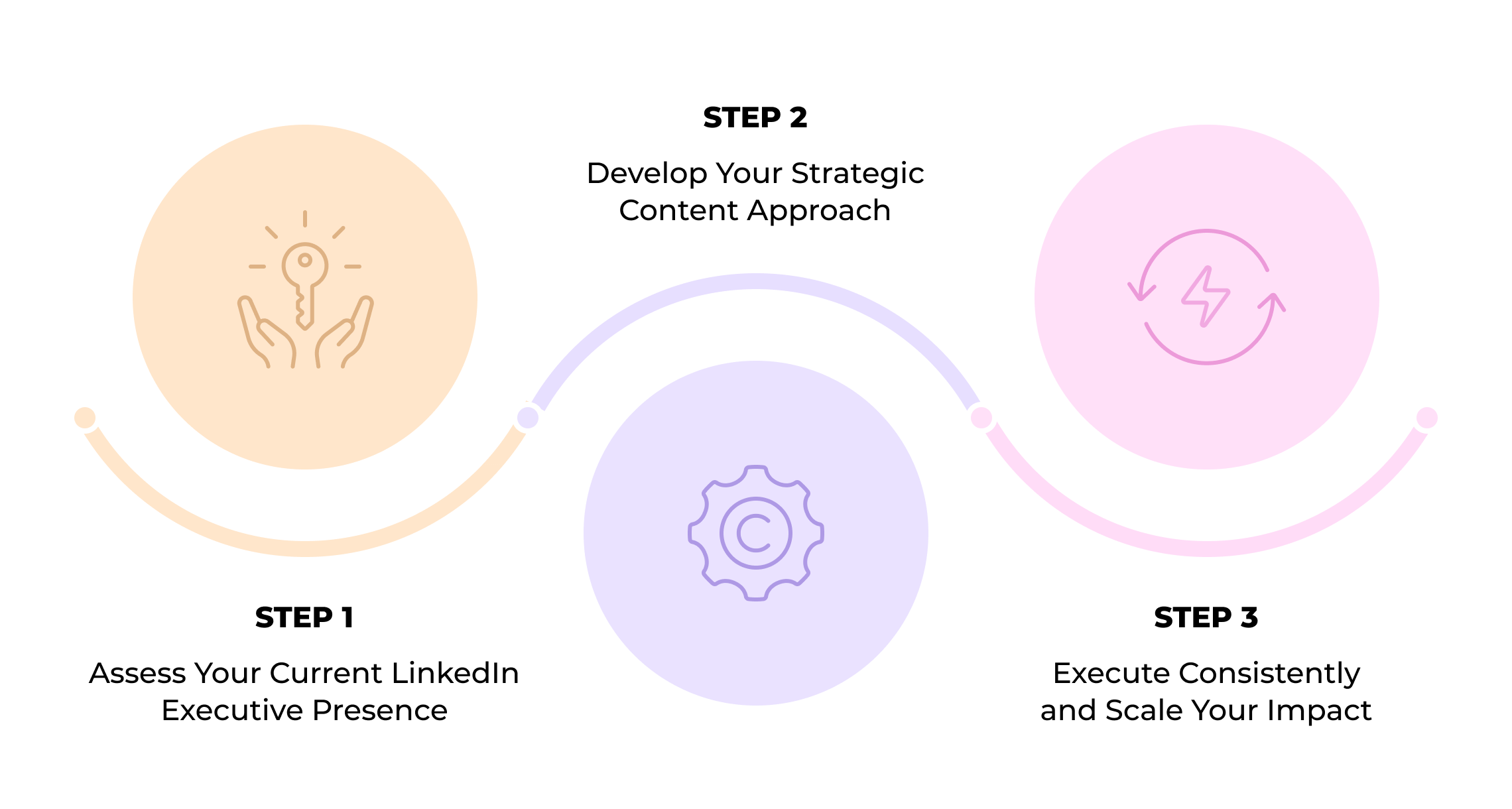
To build LinkedIn executive presence that drives marketing results, start with a complete and well-positioned profile, define two to three content themes tied to business goals, and post consistently at a sustainable pace. Align what executives publish with active sales and campaign cycles, engage daily with relevant posts, and track impact through pipeline metrics and revenue signals.
Scale. Systemize publishing and amplify high-performing posts when needed.
The average B2B buying group now includes six to ten decision makers. Each person researches independently, reviewing four or five pieces of content before contacting sales. Long before a formal conversation begins, they evaluate your leadership team on LinkedIn.
Activity from senior executives on LinkedIn has grown 35% in the US and 30% in the UK over the past five years. Case studies show measurable outcomes when executive presence is managed intentionally: higher engagement within target accounts and measurable sales impact.
Executive presence on LinkedIn influences the pipeline well before a sales call happens.
This guide explains how to build that presence step by step.
LinkedIn executive presence is how company leadership builds recognition through credible content, positioning, and active engagement. It shapes how buyers, partners, and talent evaluate your leadership. When aligned with marketing goals, it impacts pipeline growth and trust.
On LinkedIn, executive presence is visible in how leaders communicate, decide, and participate in industry discussions. 75% of professionals say a strong digital footprint strengthens leadership effectiveness. Research from the Center for Talent Innovation links it to 26% of the factors influencing promotion into senior roles.
Credibility is built through publishing, commentary, and visible decisions. Body language does not transfer through a screen, so trust develops through consistent publishing, thoughtful commentary, and informed perspective. Leaders who articulate views on industry trends demonstrate strategic thinking in public.
Content from executives often attracts stronger reach and interaction than company pages, as audiences value identifiable expertise. For investors, partners, and potential clients, a LinkedIn profile frequently forms an early perception well before any formal meeting takes place.
Personal branding defines how you want to be perceived. Executive presence reflects how that perception holds up in real interactions.
A brand may position someone as an innovative fintech leader. Credibility emerges when their communication consistently supports that positioning.
88% of consumers and stakeholders prefer working with leaders who demonstrate genuine values. While branding shapes image, executive presence is expressed through decisions made, challenges addressed, and perspectives formed through experience.
Executive visibility on LinkedIn influences candidate decisions before the first interview. Leadership teams are evaluated online, and limited activity can raise questions about credibility.
"I just did the math on my daily LinkedIn commitment over the last three months — 10M+ impressions generated. But most importantly, 37% of our monthly leads are influenced by my social presence." — Irina Novoselsky, CEO of Hootsuite
From a revenue perspective, sustained publishing positions leaders as informed industry voices and increases exposure to speaking opportunities, media mentions, and strategic partnerships. Investors and partners often form opinions before formal negotiations begin. Sales conversations benefit when familiarity and trust are established in advance.
If you want a quick overview of what executive presence on LinkedIn looks like in practice, this LinkedIn tutorial walks you through the four core elements in one short video.
Review your profile quality, positioning, and network composition. This analysis reveals where distribution, messaging, or audience targeting require improvement.
Start by reviewing whether your LinkedIn page meets completeness criteria: industry and location, current role with a detailed description, previous experience, education, at least three skills, a professional photo, and a sufficient number of connections. Accounts with photos are up to seven times more likely to appear in search results, and listing recent roles improves discoverability.
The headline should communicate scope, responsibility, and measurable impact. A job title alone rarely provides that context. For example, “CFO at Company X” offers little detail, while a headline highlighting scale, ownership, or results gives readers immediate clarity. Buyers and recruiters often spend only a few seconds scanning an executive page, so visible credentials matter.
Research indicates that more frequent publishing increases average post distribution. Accounts publishing 11 or more times weekly record nearly three times higher engagement per post than accounts posting once a week.
Publishing one to five times per week keeps you present in the feed and reinforces authority over time.
Review your connections data to understand distribution, seniority, and account relevance. Assess whether your network includes decision-makers within target accounts and reflects the level at which you operate.
A focused network of relevant executives increases exposure to strategic conversations and improves the quality of inbound interactions.
"Your personal brand is your reputation, and your reputation in perpetuity is the foundation of your career." — Gary Vaynerchuk, CEO, VaynerMedia
Strong expertise does not automatically generate distribution. Compare recent post impressions with follower count to evaluate distribution strength. Engagement levels relative to network size can indicate whether reach requires improvement before increasing content volume.

If your website or product experience does not match the credibility your executives build on LinkedIn, Darwin can help close that gap.
Executives should define two to three content themes tied to current company priorities. Without them, posts become inconsistent and drift from what the business is actually working on.
Executive content should revolve around a small set of recurring themes aligned with expertise and business priorities. Identify two to three core topics that reflect your role, industry knowledge, and company direction.
Group posts into four categories: tactical insights, transformation stories, industry analysis, and professional experience. This structure keeps communication focused and consistent.
Many B2B content strategies apply an 80/20 approach, where most posts educate the audience and a smaller portion highlights company updates or promotions.
Recent conversations are often a reliable source of ideas. Discussions with customers, team members, and peers surface recurring challenges and questions that translate naturally into relevant posts.
Organize your calendar around monthly themes supported by weekly subtopics to keep content aligned with current business priorities.
A balanced content mix may include approximately 25% company updates, 25% product insights, 10% culture-related content, and the remaining share dedicated to industry commentary and professional expertise.
Thought leadership on LinkedIn starts with taking a position. State what you believe and explain the reasoning behind it. Show how your decisions led to measurable outcomes.
Posts grounded in real projects, trade-offs, and results carry more weight than general advice. Describe the context behind a decision. Share what worked, what failed, and what changed afterward.
Use data when it strengthens the point. When data is unavailable, reference patterns observed across projects or teams.
Milestones build trust through social proof. When sharing achievements, explain the journey behind them, acknowledge contributors, and connect the milestone to broader business priorities. Awards and media features add external proof and strengthen confidence in your team.
If you want prospects who find you on LinkedIn to land on a digital experience that converts, Darwin can help.
Executives scale LinkedIn activity by publishing on a consistent schedule, engaging with relevant accounts, and reviewing engagement and pipeline signals tied to sales activity. Simple routines limit reactive posting and keep activity stable.
Move from ad-hoc publishing to a repeatable workflow. Reserve time each month to draft multiple posts, review them, and schedule publication in advance.
Document recurring themes and maintain a simple content backlog. This prevents gaps in activity and decreases dependence on last-minute ideas.
Review output monthly and adjust time allocation based on workload and engagement signals.
"If I were running marketing at a B2B startup today, LinkedIn would be our primary 'PR' channel. The founder(s) would be sharing content 3–5x/week." — Dave Gerhardt, Founder of Exit Five
Daily interaction reinforces executive presence. Focus on the following actions:
Continued interaction strengthens professional relationships and keeps posts visible.
Paid promotion can extend the reach of executive posts that already generate engagement. Instead of sponsoring generic company updates, teams can amplify content published directly from executive profiles.
ZenABM’s 2026 LinkedIn ABM Benchmarks Report analyzed 119 Thought Leader Ad campaigns with over $300K in ad spend and reported a median 2.68% click-through rate, compared to 0.42% for standard single-image ads.
Use this format selectively to scale posts that already perform well organically or support a specific market initiative.
When decision-makers follow executive profiles on LinkedIn, win rates increase by 11% and average deal size grows by 120%. Engagement with executive content shortens sales cycles by increasing recognition before outreach begins.
As reach expands, personal perspective remains essential. Share real experiences, lessons learned, and context behind decisions.
Employee posts consistently generate stronger engagement than company pages. Maintaining a personal voice sustains connection as scale grows.
If you want the digital infrastructure behind your brand to be as strong as your content, Darwin can help you build it.
Executive LinkedIn presence generates attention. Conversion depends on what people experience next.
Darwin works with B2B marketing teams on the websites, product experiences, and digital touchpoints prospects land on after engaging with executive content.
Companies we have worked with, including Wizehire, Tech.co, and Zeplin, have seen measurable results when marketing operations and digital execution align. Wizehire reduced lead cost by 26% and improved response time by 3x. Tech.co increased content output 8x while lowering monthly costs by $15K.
Your executive builds the audience. Does your digital presence know what to do with it?
Q1. How often should executives post on LinkedIn?
Publish one to five times per week if you want stable distribution. The exact number matters less than maintaining a predictable rhythm over several months.
Q2. What percentage of LinkedIn content should be educational versus promotional?
Educational posts should dominate because they build credibility. Promotional updates perform best when they are connected to a broader insight.
Q3. How does executive LinkedIn presence influence sales performance?
Executive presence influences sales by reducing friction before outreach. Familiarity shortens conversations and increases win probability.
Q4. What makes a LinkedIn profile strong?
A complete profile includes role clarity, relevant experience, skills, and a professional photo. Strong positioning improves discoverability and credibility.
Q5. How can executives scale LinkedIn activity without overwhelming their schedule?
Scale by systemizing preparation. Batch writing and monthly planning protect time and reduce reactive posting.
Contact Darwin today for a custom SEO strategy that combines the best automation tools with proven tactics to dominate Google and AI search results.
Talk to us