A practical guide to building an influencer marketing strategy in 2026: how to set goals, find the right creators, structure partnerships, and measure results.
Quick Answer:
To build an influencer marketing strategy, define campaign goals, identify the audience you want to reach, and partner with influencers whose followers match that audience. Structure collaborations with clear briefs, track engagement and conversions, and prioritize long-term partnerships that build trust and consistent brand visibility.
Consistency. Long-term influencer collaborations tend to build stronger audience trust than one-time campaigns.

Good partnerships need solid operations to support them. Darwin helps marketing teams build that.
Influencer marketing continues to grow as brands look for new ways to reach audiences through trusted voices. The market already exceeds $24 billion, yet trust remains a challenge.
Many consumers value authenticity in creator content, but a large share believe influencer posts often feel promotional or staged. This gap affects how well creator programs perform.
More than 80% of marketers already include influencers in their social strategy. The focus now shifts to building partnerships that create measurable business impact.
This article explains how marketing teams build influencer programs, evaluate creators, structure collaborations, and track campaign results.
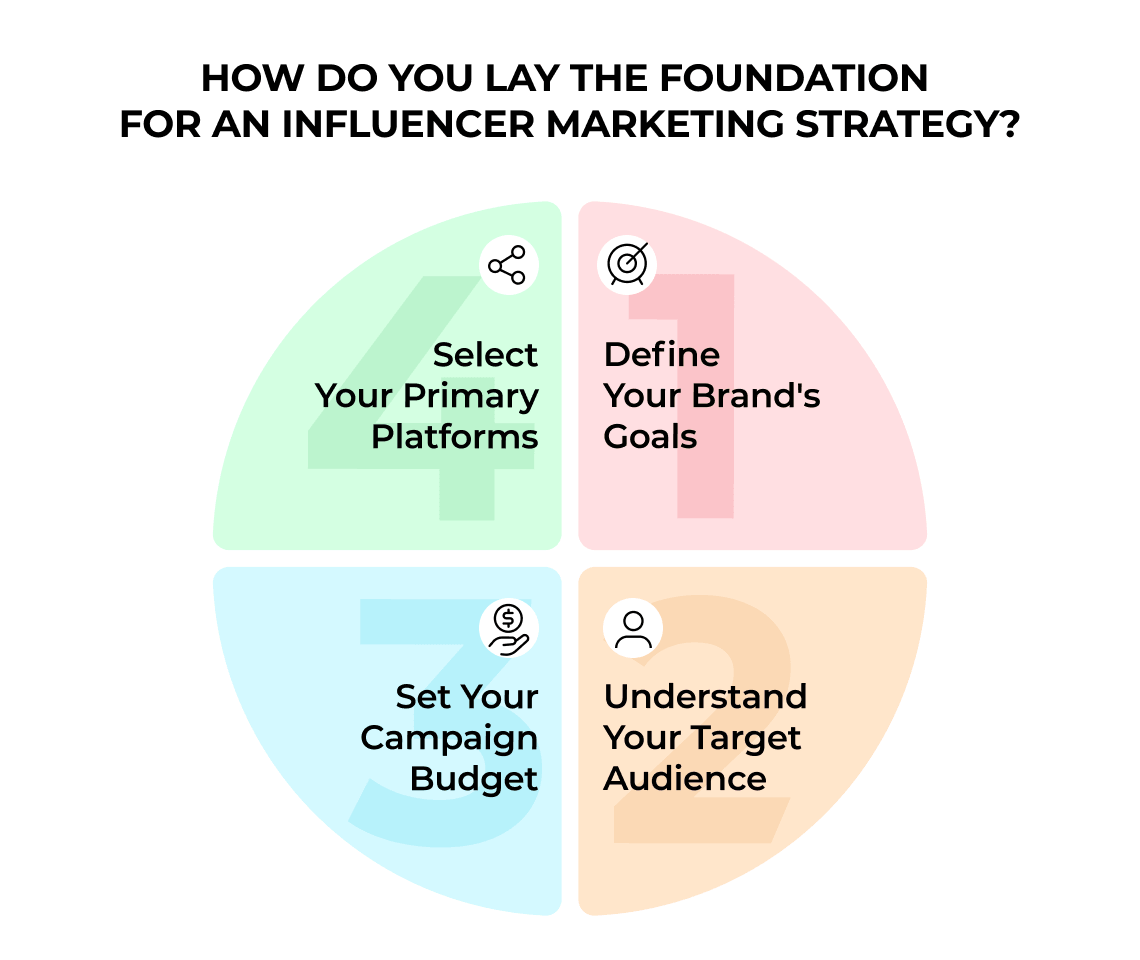
Start with goals, audience, and budget in that order. This foundation guides how creators are selected, how collaborations develop, and how results are measured.
“Today, influencer marketing can be seen as a growth engine as the industry shifts from experimentation to an essential marketing channel.” — Scott Sutton, CEO of Later
Before reviewing creator profiles, clarify what success should look like. Broad objectives such as “increase awareness” often lead to unclear outcomes. The SMART framework provides a clear way to define objectives so they stay specific, measurable, achievable, relevant, and time-bound.
Brands with clearly defined goals are four times more likely to succeed with their influencer initiatives. Defined objectives help teams decide which creators to partner with, which formats to prioritize, and which signals should guide evaluation.
Focus on one primary outcome:
• Awareness. Track reach, impressions and earned media value.
• Engagement. Measure interaction rates, saves, shares and comment quality.
• Revenue. Connect creator activity with cost per acquisition and return on investment.
Nearly seven out of 10 brands report stronger ROI after shifting toward outcome-driven goals. Metrics should match the stage of the customer journey you want to influence.
Selecting the right partners begins with understanding the people you want to reach. Start with demographics such as age, location, lifestyle and income. These factors provide a baseline for defining your target group.
Psychographics reveal deeper insight. They show what customers value, how they evaluate products and what motivates their decisions. These behavioral signals help identify creators whose content resonates with the same community.
Platform choice should reflect where people spend their time. Gen Z spends significant time on TikTok, while older demographics remain active on Instagram and Facebook. Alignment between a creator’s followers and a brand’s target group remains one of the strongest indicators of campaign success.
Influencer rates in 2026 vary widely and depend on creator size, platform and campaign scope. Nano-influencers often charge between $20 and $200 per post. Micro-influencers usually range from $100 to $5,000, while macro influencers start around $5,000 and increase from there.
Platform also affects pricing. YouTube collaborations often cost more because of production effort and longer content lifespan. Instagram Reels and TikTok posts fall into similar ranges. Engagement rate, audience location, niche relevance and usage rights influence the final price.
Exclusivity agreements and content usage rights add additional costs. Multi-post partnerships often reduce the price per deliverable and make long-term collaborations more cost-efficient than single sponsored posts.
Match each platform with your audience and campaign objective.
• Instagram. Popular with Gen Z and Millennials. Strong for lifestyle, fashion, beauty and travel content.
• YouTube. Ideal for in-depth reviews, tutorials and considered purchase decisions.
• TikTok. Fast-paced demos, trend-driven content and high engagement among younger audiences.
• LinkedIn. Best suited for B2B credibility, professional audiences and trust-building.
TikTok and Instagram Reels often command higher collaboration fees due to strong reach and visibility. Twitter and Pinterest usually require smaller budgets. Review platform expectations before planning campaign spending.
Want your influencer campaign data to feed into one place? Darwin sets up the analytics infrastructure for it.
After defining goals, audience, and budget, the next step focuses on identifying influencers who deliver meaningful results and connect with relevant communities.
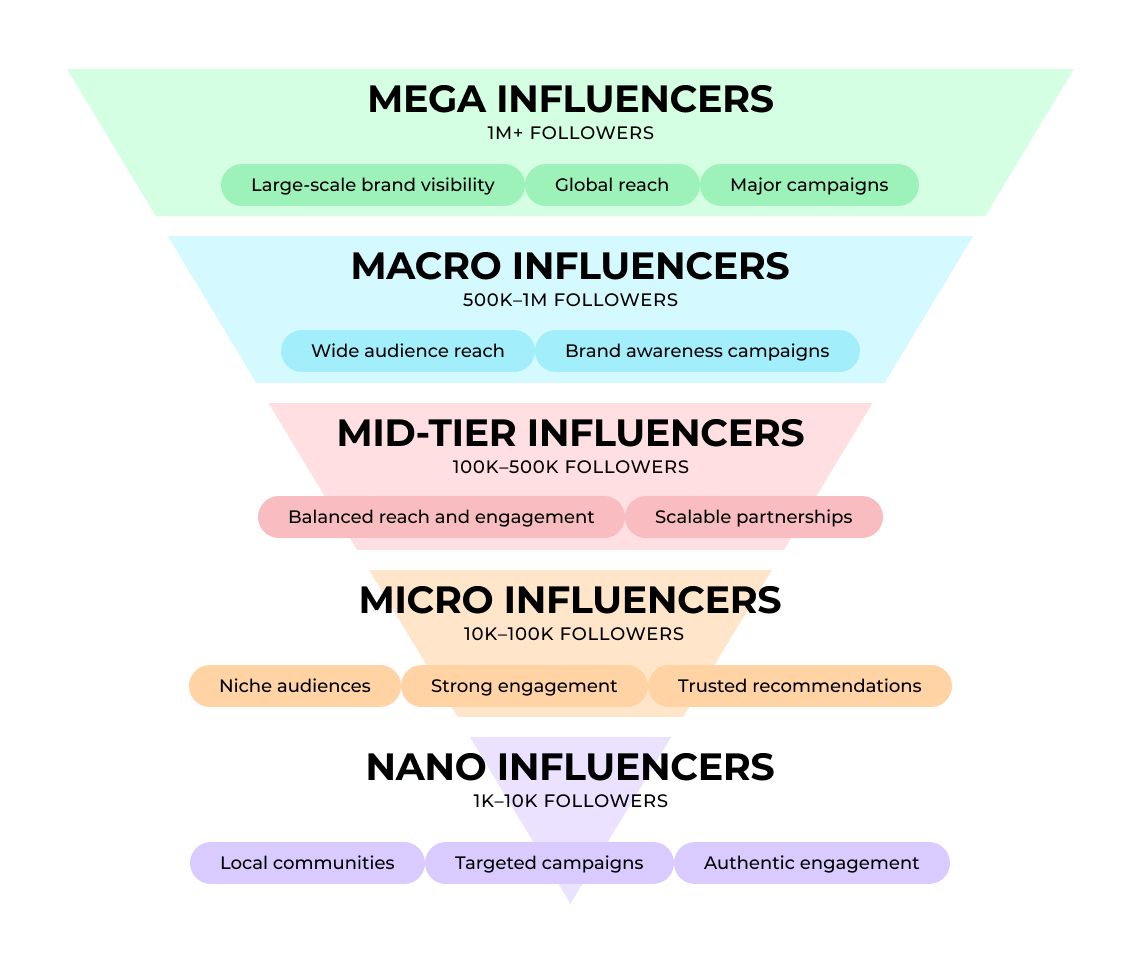
Influencer tiers help brands choose the right collaboration model. Nano-influencers (1,000–10,000 followers) often show the strongest engagement. Recent benchmarks place their average Instagram engagement around 5.2%, compared with roughly 2–3% for larger influencer tiers. Smaller communities often create stronger trust and interaction, which supports niche targeting and conversion-focused campaigns.
Micro-influencers (10,000–100,000 followers) balance reach and authenticity while maintaining solid engagement in specific niches. Mid-tier influencers (50,000–500,000) expand campaign reach while keeping a recognizable personal connection with their audiences. Macro and mega influencers deliver the broadest visibility and large-scale exposure.
Campaign objectives should guide tier selection. Nano and micro influencers work well for niche communities and sustained engagement. Macro influencers support large-scale awareness and brand visibility.
Influencer discovery platforms now go far beyond simple keyword searches. Large creator databases make it possible to filter profiles by location, niche, audience demographics, engagement signals, and lookalike audiences.
One widely used platform is Modash, which indexes public profiles on Instagram, TikTok, and YouTube with more than 1,000 followers. Its database covers over 350M creators, allowing brands to identify potential partners across multiple markets.
Another option is Aspire, whose AI-driven discovery engine analyzes audience composition, engagement behavior, content themes, and brand safety indicators. Its Creator Marketplace allows brands to publish campaign briefs and receive applications from pre-vetted influencers.
Tools such as HypeAuditor, Heepsy, Upfluence, and BuzzSumo provide additional ways to evaluate influencer accounts. These platforms offer fraud detection, audience analysis, and campaign discovery features that help teams shortlist reliable partners.
Strong creator partnerships start with understanding how a creator communicates with their audience. Review several recent posts to see whether ideas are explained clearly, products are demonstrated naturally, and the creator maintains a consistent voice over time.
Audience interaction offers one of the clearest signals when evaluating creators. Recent benchmarks from InfluenceFlow (2026) show that smaller creator communities often generate 3-8% engagement, while very large accounts frequently fall closer to 0.5-2% due to broader audiences.
Comment sections reveal the real relationship between creators and their communities. Authentic audiences leave detailed questions, feedback, and conversations connected to the content. Suspicious engagement often appears as repetitive emojis, identical phrases posted across multiple accounts, or sudden bursts of likes appearing within seconds.
Audience composition determines whether a creator can realistically reach your target market. Review age distribution, geographic location, and interests to confirm alignment with your customer profile rather than relying only on the creator’s niche label.
Most discovery platforms provide detailed audience breakdowns. Platforms such as Modash display follower location, age distribution, gender split, languages, and interest clusters, often down to the city level.
Geographic patterns deserve close attention. For example, if a creator targets a U.S. audience but more than 80% of followers come from unrelated regions, this may indicate low audience relevance or inflated reach.
When additional validation is needed, request analytics screenshots directly. Instagram Insights, YouTube Analytics, and TikTok Pro dashboards provide verified audience distribution and engagement metrics.
Previous brand collaborations offer valuable context when evaluating a creator. Review 6-12 months of posts to identify active partnerships, relationships with competing brands, and consistency in promotional activity. In regulated sectors such as health or finance, reviewing 24-36 months of activity provides a more reliable picture.
Examine how often sponsored posts appear and how those collaborations are presented to the audience. Creators who maintain a balanced mix of organic and paid posts tend to preserve stronger audience trust and more stable engagement patterns.
Certain signals may indicate that a creator account requires closer review. Sudden follower spikes, for example 10,000 new followers appearing overnight, often suggest artificial growth. Other warning signs include unusually low engagement relative to audience size, repeated comments from the same accounts, and follower-to-following ratios that appear inconsistent.
Content behavior also matters. Infrequent posting, feeds dominated entirely by sponsored content, or any record of controversial or offensive material may create risks for brand partnerships.
Fraud-detection platforms help validate audience authenticity. The HypeAuditor Audience Quality Score (1–100) provides a quick reference signal. Accounts scoring below 60 frequently show indicators of artificial engagement, while many brands prefer partners with scores above 70.
Additional validation can come from Modash, which highlights suspicious follower growth patterns and identifies audiences with high shares of inactive or automated accounts.
Vetting influencers manually takes time your team may not have. Darwin can help you build a process for it.
Finding the right creators is only the first step. The way partnerships are structured and managed determines whether collaborations generate consistent results.
Generic pitches rarely receive responses. Before sending a message, review the influencer’s content, values, and previous brand collaborations. Referencing specific posts and explaining why their audience aligns with your brand helps establish credibility from the start.
Initial outreach should stay concise. 64% of recipients decide whether to open an email based on the subject line. Including the influencer’s name and keeping the subject line under 50 characters can improve open rates.
The message itself should include a short introduction, a clear collaboration concept, and a brief explanation of the value the influencer.
“The best relationships I've had are when brands value my audience insights, give me room to create content in my authentic style, and provide communication on expectations, timelines, and goals. When that balance exists, both sides win.” — Ciara Strickland, creator and former influencer strategist at Later
Understanding typical market ranges helps structure negotiations more effectively. Brands with clear benchmarks often present the first offer, while others prefer to hear the influencer’s rate to better understand expectations. A simple question such as “What level of flexibility do you usually consider?” can open the discussion in a constructive way.
Compensation often includes more than a single payment. Product collaborations, revenue sharing, exclusive experiences, and performance-based bonuses are common structures.
Research shows that about 64% of creators prioritize financial incentives when evaluating partnerships. Clear communication about available budgets frequently leads to bundled deliverables or more flexible collaboration terms.
Start with a short brand overview and the campaign objective in two or three sentences.
Outline the key elements: main message, deliverables, deadlines, required hashtags, and payment terms. Including the content review process early helps prevent extended revision cycles.
Clarify the non-negotiable elements of the campaign such as tone guidelines, visual requirements, and core messaging. At the same time, leave room for creators to adapt the content to their own voice and audience style.
Over 80% of marketers consider influencer marketing highly effective, and audience trust plays a central role in that impact. Content resonates most when creators communicate in their own voice rather than following overly rigid scripts.
Provide clear campaign boundaries while leaving room for creative interpretation. One-line campaign objectives, short do-and-don’t examples, and clearly defined brand requirements help guide the collaboration without limiting execution.
Early collaboration improves results. Invite creators to share ideas during planning and establish simple feedback processes so approvals remain predictable and efficient.
Keeping track of multiple influencer partnerships takes more than a spreadsheet. Darwin can help you organize it.
Influencer campaigns require coordinated execution, appropriate formats, and consistent monitoring.
Short-form video remains one of the most widely used formats in influencer campaigns. More than 38% of marketers rank short video among the most impactful content types, and platforms such as TikTok, Instagram Reels, and YouTube Shorts support quick demonstrations, product highlights, and trend-driven storytelling.
Carousel posts encourage deeper interaction by prompting viewers to swipe through multiple frames. This format works well for tutorials, product explanations, and step-by-step demonstrations.
Long-form video supports more deliberate purchase decisions. Many consumers watch product videos before buying, which makes platforms such as YouTube effective for reviews, comparisons, and detailed walkthroughs.
Live streams introduce real-time interaction with audiences. About 52% of marketers consider live video one of the most engaging collaboration formats for influencer campaigns.
AI tools help teams manage creator programs more efficiently by automating discovery, outreach coordination, and campaign tracking.
Marketing teams report up to 80% efficiency improvements when influencer workflows include automated search, communication sequencing, approval management, and payment tracking.
AI also supports fraud detection. Nearly 60% of brands report encountering influencer fraud, including artificial follower spikes, bot engagement, and coordinated comment activity. Detection tools analyze engagement patterns and audience behavior before partnerships begin, helping teams protect budgets and brand reputation.
Campaign monitoring allows teams to detect weak signals early and adjust budgets, content formats, or creator partnerships while campaigns are still active.
Track engagement rate, click-through rate, conversion rate, and ROI using tools such as Google Analytics with UTM parameters. This allows attribution of traffic and purchases to specific creators and content pieces.
Creator campaign dashboards aggregate metrics from multiple channels into a single reporting view. Tools such as Sprout Social or similar analytics platforms help compare reach, engagement, and conversions across creators and content formats.
Running influencer campaigns across multiple tools? Darwin connects them into one workflow.
Sustained collaborations allow audiences to become familiar with the creator’s recommendations, which increases trust, engagement, and purchase intent over time.
Research indicates that brands working with the same creators for 12 months or longer record up to a 300% increase in engagement compared with short-term collaborations.
Long-term collaborations increasingly define influencer marketing programs. Compensation tied to measurable outcomes aligns incentives while giving creators more predictable income.
“What worked yesterday won't deliver results tomorrow.” — Lindsey Gamble, Creator Economy Consultant, LinkedIn Top Voice
Many creators now operate as independent media businesses. They track analytics, build affiliate revenue streams, and evaluate brand deals as strategic professional work. Brands that approach collaborations with the same mindset tend to sustain stronger partnerships over time.
82% of consumers trust brands more when influencers clearly disclose partnerships. Transparent collaboration and room for personal perspective strengthen credibility. Honest reviews, including balanced feedback, often resonate more strongly than scripted promotions.
Regular check-ins after campaigns help maintain collaboration. Share campaign results, involve creators in idea discussions, and provide early access to new products. When creators understand brand direction and goals, collaborations tend to remain consistent over time.
Regulatory oversight in influencer marketing continues to increase. The U.S. Federal Trade Commission (FTC) can impose penalties of up to $44,000 per violation when paid partnerships are not properly disclosed.
Disclosure remains mandatory whenever a material connection exists between a brand and a creator. Brands should include compliance clauses in partnership agreements and review published posts to confirm that sponsorship disclosures appear correctly.
Many marketing teams have strong creative instincts. What often remains missing is the operational layer that makes influencer campaigns repeatable and consistent.
Darwin works with B2B marketing and RevOps teams to connect influencer programs with the systems already running their operations. This may include:
These systems allow influencer initiatives to operate consistently as campaigns expand and reporting requirements grow.
Q1. What budget should I allocate for influencer marketing campaigns?
Budgets depend on audience size, platform, content format, and usage rights. Long-term partnerships and bundled collaborations often reduce the cost per post compared to one-time campaigns.
Q2. How can I identify fake followers and engagement on influencer accounts?
Look beyond follower count. Sudden follower spikes, unusually low engagement, repetitive emoji comments, and identical phrases across posts often signal artificial engagement.
Q3. Which social media platforms work best for different types of influencer campaigns? Platform choice should follow audience behavior. Instagram and TikTok work well for visual discovery and short-form content, YouTube supports reviews and product explanations, and LinkedIn is often used for B2B collaborations.
Q4. Should I work with nano-influencers or larger influencers for better results?
Smaller influencers often generate stronger engagement within niche communities, while larger accounts provide broader reach. Many brands combine both depending on campaign goals.
Q5. How important are long-term influencer partnerships compared to one-time campaigns?
Long-term partnerships usually build stronger audience trust and brand recognition. Repeated collaborations allow influencers to integrate products more naturally into their content.
Contact Darwin today for a custom SEO strategy that combines the best automation tools with proven tactics to dominate Google and AI search results.
Talk to us